Books
Four books on consciousness, love, time, acceptance and the choices that shape a meaningful life. Each one began as talks I gave: I transcribe them, put them in order, and rewrite the book five to ten times before it is done. Below the books are passages from each, gathered by theme, so you can see how I approach these questions.
My books
-

2026 · New
The Finale
From doing to being, and the journey to acceptance
A candid book for the later seasons of life: moving from doing to being, accepting our stained-glass humanity, and meeting loss and death with acceptance that has no conditions.
Available on Amazon in the third week of NovemberRead excerpts
-

2026 · New
And What About Now?
A spiritual life while the world unravels
When the systems around us are unraveling, what is left to do? A candid guide to personal integrity, doubt, ethics and a direct relationship with the divine, for practitioners and for anyone uneasy about the world.
Available on Amazon in the third week of NovemberRead excerpts
-
2026 · New
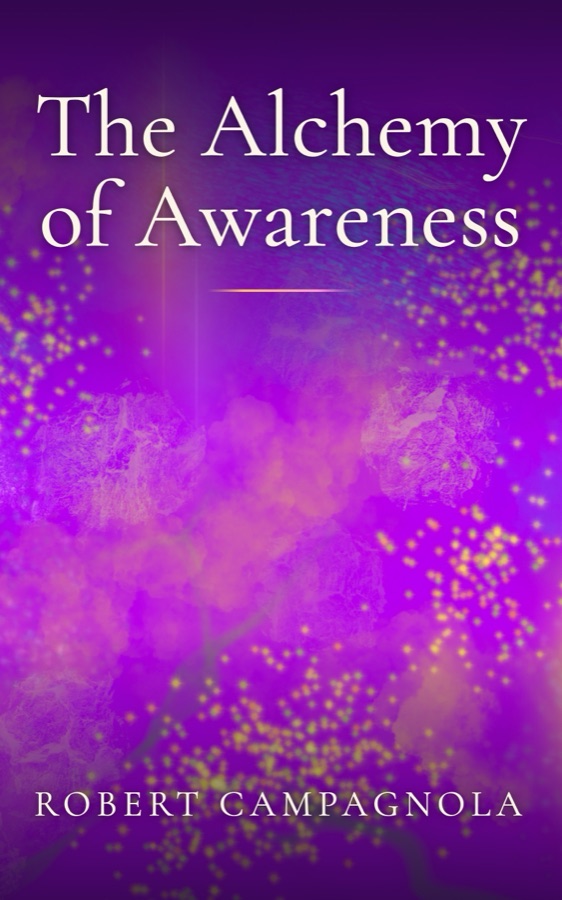
The Alchemy of Awareness
Living the spiritual life from the inside
Short, personal chapters on how spiritual life is lived from the inside: time as an ever-present now, love, inner tuning and mantra, listening to life beyond words, and the acceptance that lets the divine in.
Available on Amazon in the third week of NovemberRead excerpts
-

2014 · Available now
Living Energy
Consciousness as the life force we can learn to direct
My first book. Consciousness as “living energy,” the life force that links us to one another and to the divine, with practical chapters on karma and choice, meditation, chakras and the aura, thought forms, service and awakening.
Also at Barnes & Noble (Nook)
Ideas from the books
Passages quoted exactly as they appear in the books. Choose a theme to go straight to it.
- Consciousness and the Self
- Love and Relationships
- Time, Change and the Present
- Energy, Intention and Creation
- Suffering, Stress and Healing
- Society, Purpose and Service
- The Divine and Spiritual Practice
- Acceptance and Freedom
Consciousness and the Self
-
The Day a Houseplant Spoke
My personal journey into interspecies communication began from an unlikely place: a deep dislike for gardening. As a child, garden chores were a burden. I envisioned myself a “city boy” immersed in gadgets, not a farmer. Yet, a turning point came in 1988, in Almvik, Sweden, with a simple houseplant I grew fond of.
One winter day, while I was away, my room was cleaned, and the windows were opened. The cold air proved fatal for my beloved plant. Returning, I found it wilting, fading away. A profound sadness swept over me. I held the plant in my hands and, for some unknown reason, mentally asked, “What happened to you?” In an instant, a short, clear piece of information vibrated within me: “Cold.” I was shocked, yet absolutely certain the plant had spoken. This was a direct, undeniable communication.
In my religious context at the time, such communication with “lower beings” was condemned as “dark side” activity. So, I kept my experience to myself. Yet, my curiosity was ignited. Once free from those religious constraints, I began to experiment. In spring, I would go into the forest, touching plants, embracing trees, and simply listening. I felt a subtle energy, a curious awareness from them. While not as clear as the dying plant’s message, it was a profound connection.
Later, I discovered an incredible energy of love and life pouring from trees in the spring. Standing amidst them, I would feel myself floating in their energy, a magnificent experience. Over time, I found I could establish communication with any plant, discerning their needs and feelings simply by asking and listening.
From The Alchemy of AwarenessChapter 20: The Alchemy of Awareness: Listening to Life Beyond Words
Available on Amazon in the third week of November -
We Are Stained Glass, Not Clear Glass
You might have been taught to reject your humanity and push it away in the name of spiritual advancement. That is wrong. The real solution is to validate it, accept it, be honest with yourself, and be transparent: This is who I am now. We have a spiritual goal, and we have a present human situation, and neither changes very easily, regardless of how long you have been practicing.
The middle path is created by balancing these two realities to move closer to the divine. A helpful suggestion is to set aside the idea of being clear glass and replace it with our natural state of being stained glass. In many churches, they do not use clear glass; they use stained glass because it creates different colors and a beautiful variety of light. We are all in that condition. We are all stained glass, refracting the divine, clear energy into the different frequencies that make up who we are.
Once that is accepted, we no longer need to lie to ourselves about who we are or hide from others. What about our secrets? What do they mean? Being internally honest means embracing our secrets. We do not need to express them to everyone else; it is none of their business. However, we can have a select few people to whom we can express anything without worrying about being judged or shamed. Friends and well-wishers with whom we can laugh about our defects and feel safe. We generally cannot do that in a large group because groups are filled with demands and expectations, and the humanness we express is often rejected.
From The FinaleChapter 4: The Stained-Glass Self, Transparency and the Spiritual Human
Available on Amazon in the third week of November
Love and Relationships
-
Preventive Maintenance for Love
In committed relationships, a simple “look” can carry immense power, conveying more than words. Divorce, aside from truly radical events, is usually the culmination of many small, repeated negative interactions that build into destructive patterns. Those who struggle in their marriages often point to a series of “this little thing” and “that little thing” that gradually erode the foundation.
Maintaining healthy relationships, therefore, requires preventative maintenance. When issues arise, even minor ones, they must be discussed openly and without fear. Expressing how a situation affects us, rather than falling into a “victim” mentality and passively accepting discomfort, is crucial. Repeatedly accepting behaviors that agitate us creates a burden, a weight that strangles our self-esteem and integrity. Eventually, this continuous summing of “little things” becomes an unbearable load, leading to a breaking point.
At this “no more” stage, responses can be destructive: emotional shutdown, withdrawal, physical illness, or explosive anger. None of these offer a positive resolution. The core issue is a disregard for the “little things”: how one feels when something is done or said. Thus, in loving relationships, there is a responsibility to express discomfort when a pattern emerges that causes difficulty. This open interaction fosters trust, respect, and the ongoing health of the relationship. Neglecting this “preventative maintenance” often leads to needing external intervention, indicating a lack of respect for one’s partner and their capacity to reciprocate.
From The Alchemy of AwarenessChapter 14: The Little Things: Shaping Our Lives and Relationships
Available on Amazon in the third week of November -
Becoming Divine for Someone Else
Consider the divine. Do we believe the deities need our approval or for us to impress them? Since they are all-knowing, we cannot hide our true selves or put on a show. The only option we have is to simply be ourselves. When we learn to accept the divine, their energy, their love, and their reciprocity, the connection is perfect, without shame, future longing, or the need to impress.
This radical understanding of relating to the divine can be applied to our human interactions. We might hesitate, thinking, “The deities are all-loving and accepting, but I am not.” However, when we come before the divine, we are capable of being accepting and loving. So, what if we approach another person with that same quality? What if we set aside fear, put aside concerns about their past or future actions, and simply accept and love them as they are?
In that moment, by embodying that same quality of unconditional acceptance, you become, in a sense, divine for them. You represent the divine quality of love and understanding. This is what draws us to spiritual figures – not their ability to lecture or quote scripture, but their capacity for profound acceptance, love, and lack of expectation. Each of us can be that person for another.
From And What About Now?Chapter 18: The Doorway of Vulnerability: Finding True Connection
Available on Amazon in the third week of November
Time, Change and the Present
-
Life Is an Adventure, Not a Flight
If we deeply understand conscious evolution, the idea that life is a progressive series of steps to some ultimate goal is distasteful. What is the value of spending our time planning how to live and never having time to do so? Conscious evolution occurs in the present, for the present moment is the only one in which we can experience. If we see life as an adventure rather than a journey to some destination, we value the present far more.
My experience flying intercontinentally confirms this idea. I tend to sink into a form of dull acceptance when I sit on an airplane for ten or so hours. After all, I reason, the only point to being in this tin can soaking in harmful radiation is to get to where I want to go. I accept whatever happens in this confined space as a necessary evil.
Sometimes, though, I become absorbed in some work or thoroughly enjoy the in-flight entertainment. When my consciousness is inspired, I am more attuned to the experience in the flight, and because of that, it has some value.
Going through life as if it were merely a journey from point A to point B reduces it to a transitory experience of little meaning. Seeing life as a continuous adventure, a series of experiences that have as much meaning as I grant them, allows me to live within each moment and embrace its potential.
-
If You Could Go Back to 1963
Consider the common fantasy of time travel, often depicted in movies and stories. The allure is almost always the same: to go back and alter a past event, correct a mistake, or transform a younger self into something better. But imagine for a moment the true implications of such an act. If you, as your current self, were transported back to a specific moment in your youth – say, to 1963 – would you even recognize your surroundings? Your relationships? Your responsibilities?
The memories of your 15-year-old self are largely forgotten, the names of schoolmates, the intricacies of daily life, even basic academic knowledge like mathematics. Attempting to intervene in that past would be nothing short of a catastrophe. It highlights the impracticality, and indeed the discomfort, of trying to change what has already been. Lamenting the past becomes a fruitless endeavor; it simply cannot be altered, even if we could physically revisit it. What we can change, however, is our present relationship with a past memory. A memory doesn’t exist in the past; it exists in the present moment. So, when we revisit a traumatic experience through reflection or therapy, we are not changing the past event itself, but rather our current perception and attitude towards that memory, thereby transforming our present sense of wholeness.
From And What About Now?Chapter 6: The Paradox of Change: Embracing Who You Are
Available on Amazon in the third week of November
Energy, Intention and Creation
-
The Thought Form Born in Anger
When we experience a strong emotion while visualizing an event or action, a thought form is created. A thought form is a composite of our strong feelings and intention directed towards someone or something. For example, I go to the store, buy a TV, bring it home and find out that the image looks nothing like the image in the store. I bring the TV back to the store and demand a refund. The clerk declares I cannot return the set because it was price reduced and sold “as is.” I argue that this was not stated.
The store manager backs the clerk and I am faced with the prospect of wasting my $599.99 on a piece of junk with no possibility of exchange or refund. I become very, very angry with these idiots standing before me, blatantly cheating me. My mind is filled with rage, but I keep my mouth shut since I can do nothing more. In my thoughts, I am throwing these two cheating imbeciles through the nearest 60” TV set in a boiling rage. I stomp out the door.
I have created a thought form that is now projected onto the two salespeople and will remain hovering around them in that store. If my anger is justified and a wrong has truly been done to me, this form will have power, but if I am the one who was at fault, it will have little or no effect on the salespeople.
-
Choose the Wave You Ride
Think of playing music. A rhythm starts, a basic sound, a key. This is a flow, a movement. We have a choice: participate or not? If we choose to participate, we then decide how to express ourselves within that unfolding energy. The energy appears, offered on a plate, and we examine it, deciding how to add our artistic creation to it.
It’s similar to surfing. A wave approaches, you recognize it as one you want, and you position yourself precisely. As it swells, you are lifted, and then you shoot down, moving and steering as you wish. You didn’t create the wave, but you chose to take advantage of it, in a particular way, at a particular time. You chose to ride it. You also have the choice not to.
I’ve witnessed situations of immense destructive flow: revolutions, civil wars. In such times, the prevailing energy moved towards smashing, destruction, and rioting. I chose not to participate. I recognized a flow I didn’t like and consciously stepped away. Similarly, I’ve observed political movements built on polished promises, and I’ve chosen not to engage, recognizing them as being similar to all the rest.
Therefore, “to go with the flow” means this: there is energy moving in some way; I observe it, choose whether to participate, and then use that energy to expand myself, accomplish something, express something, or help others.
From The Alchemy of AwarenessChapter 13: The Power of Choosing Your Flow
Available on Amazon in the third week of November
Suffering, Stress and Healing
-
What You Resist Persists
How we use this art of awareness depends on our circumstances and our desires. I once had a serious case of adhesions on my leg muscles and ligaments. My therapist had to break them up with extreme force. This caused me such pain that I screamed and figuratively went through the roof. When the other therapists in the office complained of the noise, I decided to try another tactic. Instead of resisting the pain and responding to it with screams, I decided to feel the pain and focus my awareness on it. The experience was interesting. The more I focused my awareness on the pain alone to the exclusion of all other feelings, the less that pain hurt! It still “hurt” in the traditional sense of the word, but the pain was far less than before. By ceasing to resist the pain, I let it go by focusing on it. I previously learned that what you resist persists, so I stopped resisting it and embraced it.
I discovered an entirely different way of perceiving my bodily pain. Without this awareness, I do not know if I could have completed the therapy.
-
What Do You Do When You Don’t Want To?
Life, as we know, is often full of unexpected demands. Recently, a Zoom meeting sprang up with barely a day’s notice, on top of an urgent doctor’s visit for my mother. Two days in a row, unforeseen obligations were thrust upon me. When the organizer of the Zoom meeting offered to cancel, considering the short notice, I swiftly declined. “No, no,” I insisted. “It has been announced. It is my responsibility, my duty; I am obligated.” Yet, internally, a different sentiment simmered. All morning, a grump walked around, muttering, “I don’t wanna.”
This internal resistance posed a problem. How could I meet others who came with good faith and intentions when I felt so rotten and miserable? What do you do when you simply don’t want to? For me, the answer lies in turning inward, to my spiritual guides, to the quiet sanctuary of my temple room. There, I voiced my reluctance: “I don’t want to.” Their response was insightful: “That’s interesting. Sit down. Everyone feels like that nowadays. You’re just like everybody else. None of us want to do anything anymore; the whole world feels so messed up.” And with that, my topic for the day was set: What do you do when you don’t want to?
From And What About Now?Chapter 13: The Alchemy of Presence: Blending Being and Doing
Available on Amazon in the third week of November
Society, Purpose and Service
-
Starving for Someone to Be There
The world today is a chaotic, interconnected mess. The media ensures we are acutely aware of every crisis, creating a palpable sense of struggle and impending doom for many, regardless of their financial status. As spiritual practitioners, our core principle is to remain grounded in spiritual energy and to embody service. This means navigating the chaos ourselves while simultaneously being present for others. Those who genuinely understand and cultivate the spirit of service are profoundly appreciated in today’s world. People are starving for connection, for someone to truly listen, to simply be there, even if only for a short time, or in a limited capacity. This simple presence fosters the powerful feeling of “I am not alone,” and “we are in this together.” This sense of soul connection transcends all politics, economics, social barriers, and differences in thought. It touches the spiritual realm where we are never alone, every expression is heard, every act is service, and every feeling is supported by care and love. We don’t need to be great yogis or famous personalities; we simply need to manifest these fundamental spiritual qualities that emanate from the very essence of our being. Cultivating this attitude aligns us perfectly with the divine, enabling a profound sense of hearing and being heard. Without these qualities, intellectual knowledge alone (even memorizing countless scriptures) will not provide that direct, intimate connection to the Supreme.
From And What About Now?Chapter 5: The Spectrum of Perception: Finding Common Ground in a Changing World
Available on Amazon in the third week of November -
From Ultimate Doer to Ultimate Be-er
For me, the main objective in my old age is simply to be of service to others. I see situations differently than I used to, and respond with more maturity arising from my lifetime of experiences. Instead of utilizing the youthful, critical method of saying, “I see what you’re doing, it’s wrong, you have to change everything,” as an elder I approach people with empathy. I ask, “How do you feel about this? What is it that makes you want to do what you do, and is there some way I can assist you in doing it better?”
In the old days, we may have facilitated people, but the goal of that facilitation was to extract their labor for the organization’s expansion. That no longer works. Now, from our perspective of age and environment, we wish to facilitate others so that they can be the very best they can be. If you look closely, this represents a profound shift: moving from being the ultimate doer to becoming the ultimate be-er.
I believe this perspective totally transforms our vision of what it means to serve the Lord in love. Helping someone else be the best they can be is a deeply selfless act because it is no longer about you; it is entirely about them. When we stand before the Divine, we no longer carry the heavy burden of self-interest. We offer love and service selflessly, and we can offer that exact same energy to others.
From The FinaleChapter 5: The Arc of Aging and Authenticity
Available on Amazon in the third week of November
The Divine and Spiritual Practice
-
Tuned to Receive a Miracle
To have a spiritual experience, we must be tuned to receive it. If I were to walk into a temple disconnected from my being, I might look at the deities and expect a miracle to happen to me, an external event that would sweep me away. While this can happen, it’s not the complete picture. One of the most significant spiritual experiences of my life occurred in Hyderabad, India, in 1972. It was a hot night, and I was sleeping on the roof. A group of saintly persons, sadhus, began chanting mantras related to Lord Shiva. The sound was so beautiful, so gorgeous, that I lay awake all night, completely lost in it. I wasn’t even thinking; I was simply absorbed.
This was an instance of an external spiritual experience drawing me in. Yet, there were several other people sleeping on the roof with me, and they slept soundly through the night, completely unaware of the chanting. They were present for the same event, but they did not experience it. This taught me a valuable lesson: even if you walk into a miracle, you have to be in tune with it to appreciate or even perceive it. An experience is a reciprocating event. It requires both a source and a receiver who are on the same frequency. If the receiver isn’t tuned in, does the miracle truly exist for them? Philosophers and quantum physicists have long grappled with this idea. It seems that consciousness is essential for any event to be registered as part of existence. Unless you consciously register an event, for all practical purposes, it doesn’t exist for you.
From The Alchemy of AwarenessChapter 9: The Art of Inner Tuning
Available on Amazon in the third week of November -
Beyond Karma and Grace
In almost every spiritual tradition, the same question eventually arises: does one attain the spiritual goal through action or through grace? For thousands of years this has been the central debate. Do we “earn” our way through correct deeds, or does nothing truly work unless mercy descends? Is the path achieved, or is it bestowed?
But in the specific transition we are discussing, neither of these classical paradigms fully applies. The real question becomes: What causes a being from the spiritual realm to reach toward you and say, “Come in”? From a practical standpoint, do we imagine that the residents of that realm keep a ledger, carefully tracking our actions? And even more provocatively, do we imagine they arbitrarily distribute mercy to some and not to others? Why would they? What purpose would selective mercy serve?
This is not a dismissal of the traditional debate. Deeds matter. Mercy matters. Everything we do and everything that is given to us forms a complete existential package. But the moment we are speaking about, the moment of actual spiritual transition, is something far more specific. It is not about physical transformation, nor about dying and entering a spiritual body. It can include those things, but they are not the core mechanism. The essence of the transition is a divine resonance.
It is the moment when your inner feeling aligns perfectly with the feeling of the residents of that realm, whether one thinks of the cowherd girls or boys, or any other spiritual personalities. When those beings recognize that your feeling has become identical to theirs, they naturally and seamlessly incorporate you into their environment. It is not even an “invitation” in the formal sense. It is an organic recognition: Come in. You belong here. You are one of us.
From The FinaleChapter 12: The Crisis of Connection and the Spiritual Reality of Feeling
Available on Amazon in the third week of November
Acceptance and Freedom
-
When Surrender Brings Serenity
The hope that things will eventually change may be little comfort to one who is suffering greatly. Life is not always fair, just, or pleasurable. No amount of adjustment or discipline can erase cataclysmic events that boggle the human mind. Sometimes our burden seems too great to bear.
In situations that cannot be changed, acceptance of utter hopelessness brings relief. Standing with our hands raised to the sky in complete surrender can bring serenity and a deep resonance with the suffering of others. Absolute acceptance is monumental, and after a long struggle with hopelessness, catapults us into illumination.
Accepting that we cannot change our unpleasant misfortune is one of the first steps to letting hardship go. If we are unable to change a situation, we must move on. There is little use in hanging on to something we cannot attain. Obviously we try to do what is right, but we don’t always succeed.
Failure can cause us to become depressed and condemn ourselves. Getting locked into a pattern of depressing self-condemnation leads to despair and emotional coldness. We had better avoid getting locked into that dark freezer by dealing with it while we can.
All in all, life lived by moving with the reality of the moment is lived optimally, since we lose no energy resisting it. Let time pass, let nature run its course, and simply flow with the energy that enlivens the universe. We do not require hope, for hope expects a better future. Live with the moment and flow with it, for nothing more is required of us. Although one who is depressed may find this advice hard to swallow, it is better than doing nothing when little else can be done.
-
What Are We Afraid of Losing?
Many of us mull over the question of death even if we don’t say it aloud. Most of us are not afraid to die, so long as it isn’t painful. At the same time, we are very afraid to lose someone we love. How do we deal with this fear?
Fear of this nature is entirely natural. It is fundamentally a fear of the unknown. Because we do not have any memory or remembrance of death, it is unknown to us, and therefore we are afraid. One aspect of this fear is worrying about all that we are leaving behind. In the true state of acceptance, there is no fear. Fear is, in fact, one of the greatest obstacles to acceptance.
Although no one wants to lose loved ones, when we say, “I’m afraid to lose those I love,” we should examine what we think we are losing. If we are unable to connect or maintain a connection with those we love after death, then we do not factually “have” them. We are together for some time, and then we are not. While we are able to connect, we have that loving connection. When we are no longer able, we no longer have it. If we die unexpectedly, there is nothing to fear because there is no time to be afraid. If we die expectedly (for example, lying in a bed for a long time) we gradually come to terms with it.
From The FinaleChapter 13: The Penultimate Task: The Journey to Acceptance
Available on Amazon in the third week of November